
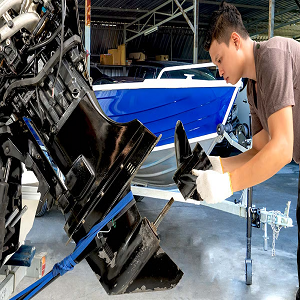
Marine Outboard Parts Maintenance: A Seasonal Checklist for Boat Owners
Regular maintenance does more than keep an outboard running. It helps boat owners find worn marine outboard parts before a small defect becomes a cooling failure, gearcase repair, fuel problem, or steering concern. A seasonal checklist is useful because an engine can deteriorate while it is sitting: fuel can degrade, moisture can corrode electrical connections, seals can age, and an impeller can take a set.
The right maintenance plan is specific to the engine. Always use the manufacturer’s service schedule and specifications, and identify the engine brand, model, year, horsepower, serial number, and configuration before ordering parts. This information is essential when selecting filters, spark plugs, water-pump kits, seals, anodes, propellers, and other boat engine parts.
This guide organizes common checks by season and system, with practical advice for inspection, storage, and replacement planning. It is a maintenance framework rather than a substitute for the engine’s service manual: intervals, fluids, torque values, and storage steps vary by brand, model, year, horsepower, and serial-number range. Use the checklist to prepare questions and records before carrying out engine-specific work.
Pre-Launch Checks
Before the first trip, inspect the outboard as a complete propulsion and control system. Remove the cowling and look for loose hardware, damaged wires, fuel odor, corrosion, leaks, and rodent damage. Confirm that the engine is mounted securely and that steering and throttle controls move smoothly without unusual resistance.
Fuel and lubrication checks
Inspect fuel lines, primer bulbs, clamps, filters, and tank connections. Replace hoses or fittings that are cracked, soft, swollen, abraded, or not suitable for marine fuel service. If a water-separating filter is installed, check its condition and replace it according to the service schedule or contamination findings.
For four-stroke engines, check engine oil level and condition using the manufacturer’s procedure. For two-stroke engines, verify the specified oil supply and mixing or injection arrangement. Never mix procedures between engine types. Confirm that the lubricant and filter are approved for the engine.
Pre-launch checklist:
- Fuel system free of leaks and strong fuel odor
- Correct oil level and lubricant type
- Battery secured with clean, tight terminals
- Fuses and wiring protected from moisture
- Propeller retaining hardware secure
- Cooling-water intake clear
- Gear lubricant checked for water contamination
- Steering, shift, and throttle controls operating correctly
Propeller and lower-unit inspection
Remove fishing line, weeds, and debris from around the propeller shaft. Inspect blades for bends, cracks, deep corrosion, and missing material. Check the hub for signs of slipping and inspect the thrust washer, spacer, nut, and locking device. If the propeller hit an object, inspect the shaft for runout or damage rather than simply installing a new propeller.
Check the lower unit for oil leakage and examine the drain or fill-plug gasket when servicing lubricant. Milky lubricant suggests water intrusion and should be investigated before launch.
In-Season Maintenance
During the boating season, short inspections after use are often more valuable than waiting for a scheduled service. Salt, sand, silt, and debris can affect cooling passages, propeller components, anodes, and electrical connections.
Flush and inspect the cooling system
Flush the engine after operating in salt, brackish, or muddy water, using the manufacturer’s method and appropriate water supply. Do not assume that flushing a motor can correct a blocked intake, damaged impeller, or restricted passage. Watch for changes in the telltale stream and warning indicators.
An impeller is a service item because its rubber vanes can harden, deform, or break. The correct replacement may be a complete water-pump kit containing the impeller, housing, wear plate, key, and seals. Compare the kit contents with the service manual and inspect the pump housing for scoring.
Monitor operating behavior
Pay attention to changes rather than relying only on alarms. Record difficult starts, unstable idle, reduced acceleration, unusual smoke, overheating warnings, vibration, shifting noise, or changes in trim performance. A log helps distinguish a recurring condition from a one-time event.
Stop and investigate promptly if you notice:
- A sudden loss of cooling-water flow
- A fuel leak or persistent fuel odor
- Severe vibration after propeller impact
- A new grinding or whining sound
- Steering play or control stiffness
- A trim system that leaks or will not hold position
Continuing to operate with these symptoms can increase damage and create a safety risk.
Midseason Service Planning
Midseason is a good time to compare actual maintenance with the manufacturer’s schedule. Service intervals may be based on hours, time, operating conditions, or a combination of these factors. Saltwater use, heavy loads, frequent trolling, shallow-water operation, and long storage periods can influence inspection needs.
Filters, plugs, and anodes
Replace fuel, oil, and air filters where fitted according to the approved interval and application. Inspect spark plugs for condition, deposits, damage, and correct gap. A plug that fits the threads but has an incorrect heat range or reach is not a suitable substitute.
Inspect sacrificial anodes and replace them when they are substantially consumed or no longer providing effective protection. Anodes must be appropriate for the water environment and the manufacturer’s system. Do not paint over the active anode surface.
Lubrication points and fasteners
Use the specified marine grease on serviceable pivot points, steering components, and propeller-shaft splines where instructed. Remove the propeller during scheduled inspection to check the shaft and fishing-line intrusion. Do not apply grease to components that are sealed or that the manual identifies as dry.
Check accessible fasteners, brackets, clamps, and battery restraints. Tightening without a torque specification can damage threads or distort components, so use the service manual whenever torque matters.
End-of-Season Service
End-of-season service prepares the engine for storage and gives you time to address defects before the next launch. Clean the exterior, flush according to the manufacturer’s procedure, and inspect for corrosion or damage.
Fuel-storage considerations
Follow the engine and fuel-system manufacturer’s storage instructions. Depending on the system, preparation may involve fresh fuel, an approved stabilizing product, fuel-system treatment, or controlled consumption of remaining fuel. Do not improvise a procedure for a fuel-injected system or mix chemicals without confirming suitability.
Label the date and type of treatment used. If water or debris is present, correct the source and clean the affected components instead of relying on an additive alone.
Lower-unit lubricant and corrosion protection
Service lower-unit lubricant as directed and inspect the drained fluid for water or metal. Water contamination should be diagnosed before storage because freezing conditions or continued corrosion can worsen the problem. Replace sealing washers or gaskets when the manual calls for new ones.
Rinse salt deposits from external surfaces and protect specified areas with the approved corrosion-control product. Keep spray away from belts, friction surfaces, and electrical contacts unless the product and procedure permit it.
Winter Storage and Spring Recommissioning
Storage should protect the engine without creating new problems. Store the outboard in the manufacturer’s recommended position and avoid trapping moisture under covers. Keep ventilation and security in balance, especially in humid environments.
Battery and electrical protection
Follow battery-storage instructions, including charging, isolation, and ventilation. Inspect terminals and cables before reconnecting. Do not assume a battery is sound because the starter turns; voltage under load and connection condition both matter.
At recommissioning, check wiring, grounds, connectors, relays, and fuse holders for corrosion or moisture. Intermittent electrical faults often begin at connection points, not at the control module.
Cooling-system restart checks
Before the first run, confirm that the intake is clear, the water supply or launch environment is appropriate, and the telltale and warning system operate normally. If the engine has been stored for a long period, do not ignore the service condition of the impeller. A rubber component can age even when engine hours are low.
 Send Email
 Maiolyn