
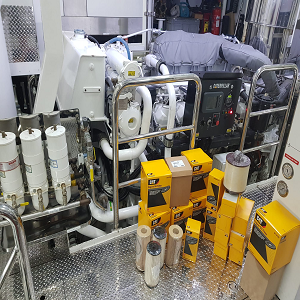
Why Checking the Complete Specification of Marine Engine Parts is So Important?
For each candidate part, confirm:
- Physical dimensions and mounting points
- Material and corrosion resistance
- Electrical voltage, resistance, connector, and polarity where relevant
- Fuel, oil, or water pressure and flow requirements
- Temperature or pressure range
- Spline, tooth, thread, or shaft configuration
- Included seals, gaskets, keys, washers, and fasteners
- Software, programming, or calibration needs
- Installation direction and torque requirements
If the documentation does not provide enough information to verify fitment, pause the purchase and ask the supplier or a qualified technician for an application-specific answer.
OEM, Aftermarket, and Used Parts
The correct choice depends on the part's function, available documentation, risk, and installation cost.
When OEM parts are useful
Original-equipment parts can simplify selection because they are cataloged for the manufacturer’s models. They may be especially appropriate for electronic control modules, specialized fuel injectors, model-specific sensors, safety-related steering or trim components, and assemblies with calibrated characteristics.
OEM does not remove the need to verify model and serial number. An official part can still be wrong for a particular production range if it is ordered under an incomplete description.
When aftermarket parts may be suitable
Aftermarket parts can be a practical choice when the supplier provides clear application data, material information, quality controls, and warranty terms. Common examples may include service kits, filters, impellers, gaskets, anodes, and selected propeller components, provided the specification matches the engine.
Compare the total cost, not just the price. Include shipping, seals, special tools, downtime, and the consequences of premature failure.
Risks of used or salvaged parts
Used parts may be appropriate for noncritical cosmetic components, but hidden corrosion, fatigue, wear, and unknown operating history make them harder to evaluate. Avoid assuming that a used electronic or lower-unit part is sound because it came from a similar engine. Inspectors should confirm condition, part number, and compatibility before installation.
Replacement Decisions by Part Type
Different parts need different decision rules.
Spark plugs and filters
Confirm the specified part number, heat range, thread, reach, gap, filter media, and flow direction. Follow the manual for installation torque and service intervals. Do not change spark-plug type or gap to solve a problem without diagnosing the underlying issue.
Water-pump kits
Consider replacing the impeller together with the housing, wear plate, key, and seals when inspection shows wear or when the service procedure recommends a kit. Salt deposits, scoring, heat damage, and broken vanes may justify replacing more than the rubber impeller alone.
Propellers
Use the existing propeller data as a starting point, then consider boat weight, normal passenger load, water conditions, and the engine’s recommended operating range. A propeller that is too aggressive can overload the engine; one that is too light may allow excessive engine speed. Check for manufacturer guidance before testing alternatives.
Sensors and electronic modules
These parts require the highest level of verification. Confirm the connector, software or calibration requirement, diagnostic procedure, and any post-installation setup. Replacing a sensor without checking wiring and power supply can leave the original fault unresolved.
Common Purchasing Mistakes to Avoid
Avoid these frequent errors:
- Ordering by horsepower alone
- Ignoring model suffixes or serial-number ranges
- Assuming a visual match proves compatibility
- Reusing old gaskets, seals, locking hardware, or cotter pins when the manual calls for new ones
- Buying a propeller without checking pitch and engine operating range
- Mixing metric and inch hardware without confirmation
- Selecting a non-marine fuel hose or electrical connector
- Installing a replacement without checking the root cause of the failure
- Failing to photograph wire routing and hose connections before disassembly
A good supplier should be able to explain the application basis for the recommendation, not merely repeat a product title. Ask for the applicable model and serial-number range, and keep the answer with your order record. Clear documentation is particularly valuable when a part has been superseded or when several engines share a similar name but use different components.
A Practical Fitment Checklist
Before checkout, use this sequence:
1. Read the engine identification plate.
2. Confirm brand, model, year, horsepower, serial number, and shaft configuration.
3. Identify the system and exact component needed.
4. Find the manufacturer part number or approved superseding number.
5. Compare the parts diagram and application range.
6. Check dimensions, connectors, seals, materials, and specifications.
7. Confirm whether a kit includes all required service items.
8. Review installation tools, torque values, and calibration steps.
9. Compare warranty and return conditions.
10. Save the order record with the engine information.
This process takes less time than returning an incompatible component or diagnosing a new fault caused by an incorrect installation. It also gives you a useful record for future service, especially when the engine changes hands or a technician needs to trace a previous repair. Save the completed checklist with the invoice, part number, and installation notes so the next decision starts with verified information.
Conclusion: Buy for Verified Fit, Not Just Appearance
Choosing marine outboard parts is a fitment exercise, not a guess based on a product photograph. Start with the engine brand, model, year, horsepower, serial number, and manufacturer specifications. Then verify the part number, system requirements, dimensions, materials, and installation conditions.
Use OEM or well-documented aftermarket outboard replacement parts according to the part’s risk and the supplier’s evidence. For internal powerhead, gearcase, steering, trim, and electronic repairs, use the service manual or consult a qualified marine technician. Before placing your next order, complete the checklist and purchase only boat engine parts that are documented for your exact engine. If any fitment detail remains uncertain, pause the purchase and resolve that uncertainty before installation rather than relying on a visual match. Make verified compatibility the final purchase requirement, not an assumption made after the part arrives. If the seller cannot document the fit, delay the order and obtain the missing application information before taking the boat back on the water.
 Send Email
 Maiolyn